Benefits of Cannabidiol (CBD)

Over the last few months weโ€™ve given you an overview of hemp, the endocannabinoid system (ECS) and the beneficial cannabinoids found in Cannabis sativa L. In last weekโ€™s post The Benefits of Cannabinoids there was one significant cannabinoid missing, cannabidiol (CBD). In this weekโ€™s post we will discuss the wildly popular cannabinoid cannabidiol (canna-bi-diahl) and help you begin to understand the distinctions between various CBD product forms.

Nowadays, CBD is everywhere and is constantly being talked aboutโ€” and for good reason! With so many options, product types, and forms, it has become increasingly difficult to make an educated decision about which form of CBD to choose. One of the most important things to understand is how to determine the differences between CBD products. One topic we will discuss further, following the benefits of CBD, is how to understand the differences in forms of CBD, including full spectrum, broad spectrum, or isolate products.

As we shared in our earlier post Hemp vs. Marijuana, CBD was discovered in the 1940s and is one the most abundant cannabinoids in the hemp plant. It does not produce the psychotropic effects commonly associated with THC. When CBD was discovered, researchers recognized the potential of the plant, but due to legality reasons, which have unfortunately continued until very recently, and other obstacles it took over 20 years to begin really exploring and understanding how to best expand on some of the original findings. Throughout 1963-64, Dr.Raphael Mechoulam, an organic chemist at the Weizman Institute in Israel, and his team worked to identify the chemical structure of CBD, isolate it, and then synthetically recreate it in his lab. They found that, although CBD is one of the most abundant cannabinoids, it could be given at increased amounts with little to no side effects. It was Dr. Mechoulam and his team that first recognized that CBD had antiepileptic properties, research that would later be used to develop FDA approved pharmaceuticals; one for use in rare childhood seizure disorders. [1]

What is Cannabidiol (CBD)?

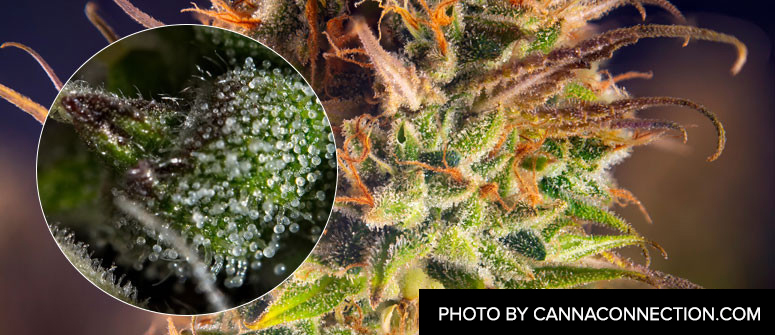
CBD is a phytocannabinoid found in various concentrations through most parts of the hemp plant, but the highest levels are found in the flowers and trichomes. Phytocannabinoids accumulate in the sticky cavity of trichomes, which are small hairs that largely occur in female flowers and can be found in lower concentrations in other aerial parts of the plant.[2]
Benefits of CBD
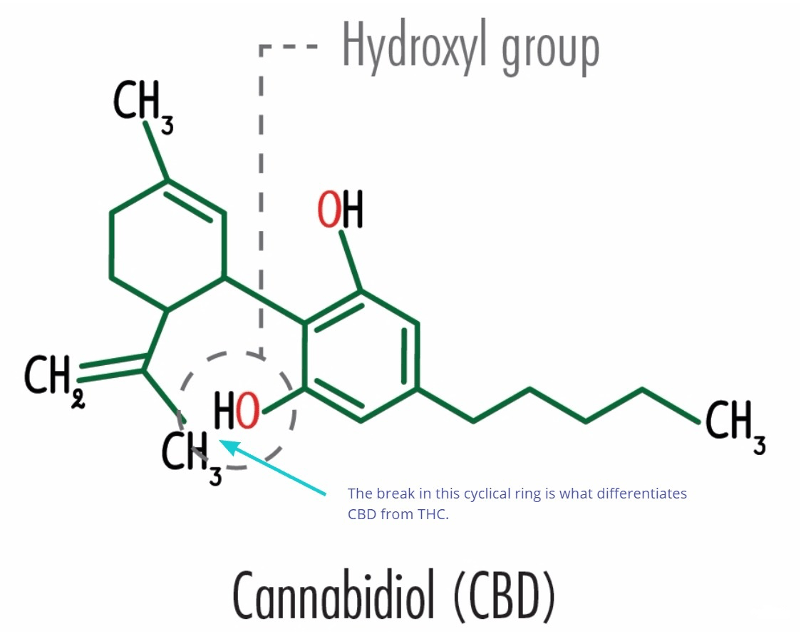
In our last post titledย The Benefits of Cannabinoids, we learned that CBD does not just start as CBD. It is created through a series of chemical conversions which occur in nature mostly through changes in temperature and time.ย This begins when Cannabigerolic acid (CBGa), the mother of cannabinoids, is broken down into its non-acidic form Cannabigerol (CBG), which then breaks down into Cannabidiolic acid (CBDa) and Tetrahydrocannabinolic acid (THCa). CBDa is then further broken down into CBD.
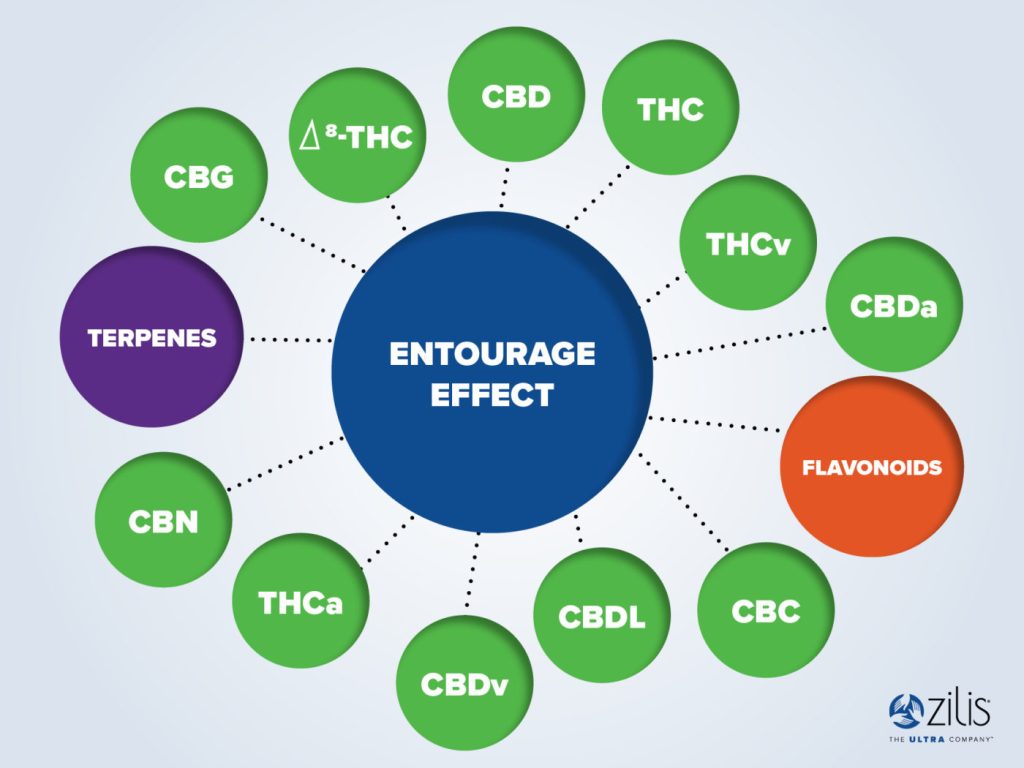
Interestingly it is estimated that by 2025 CBD will be close to a $25 billion-dollar industry.[3]ย Clearly CBD has gained some incredible popularity with consumers, but we are also seeing an increase in research and clinical studies of the compound and are starting to discover new and exciting benefits. There is increasing evidence that CBD has numerous therapeutic potentials and is essential to supporting inner balance and the overall health and wellness of many of our bodyโ€™s systems. If you read our previous posts on the ECS, you know that CBD binds to the network of receptors throughout the body that make up the ECS and play an important part in regulating pain perception, balanced emotions, and other autonomic functions. Several studies demonstrate the reduction of pain perception following intake of CBD,[4]ย and when combined with other phytocannabinoids, it can cause an even greater reduction in pain perception. This research also supports the importance of the entourage effect to benefit health, using the synergistic effects of all the compounds found in hemp versus using isolated compounds.
What is not commonly known about CBD and its potential benefits is that, in 1999, the U.S. Government, under the Department of Health and Human Services, filed a patent on non-psychoactive cannabinoids, including CBD, as a treatment for specific illnesses. The U.S. Government was awarded that patent in 2003; โ€œCannabinoids as antioxidants and neuroprotectants, Unites States Patent 6,630,507โ€. Click here to see the full patent.

As popularity has grown over this compound both medical and regulatory agencies have begun to weigh-in with their opinions about the benefits and safety profiles of CBD. For example, the World Health Organization (WHO) published their Cannabidiol (CBD) Critical Review Report[5] where the WHO discussed the available research in regard to medical and recreational uses, safety profiles, and outcomes following CBD usage. Following this report, the WHO recommended that pure CBD and CBD preparations containing no more than 0.2% THC should no longer be included in the international drug control conventions, after noting in their report that CBD had been found to be โ€œgenerally well tolerated with a good safety profileโ€.

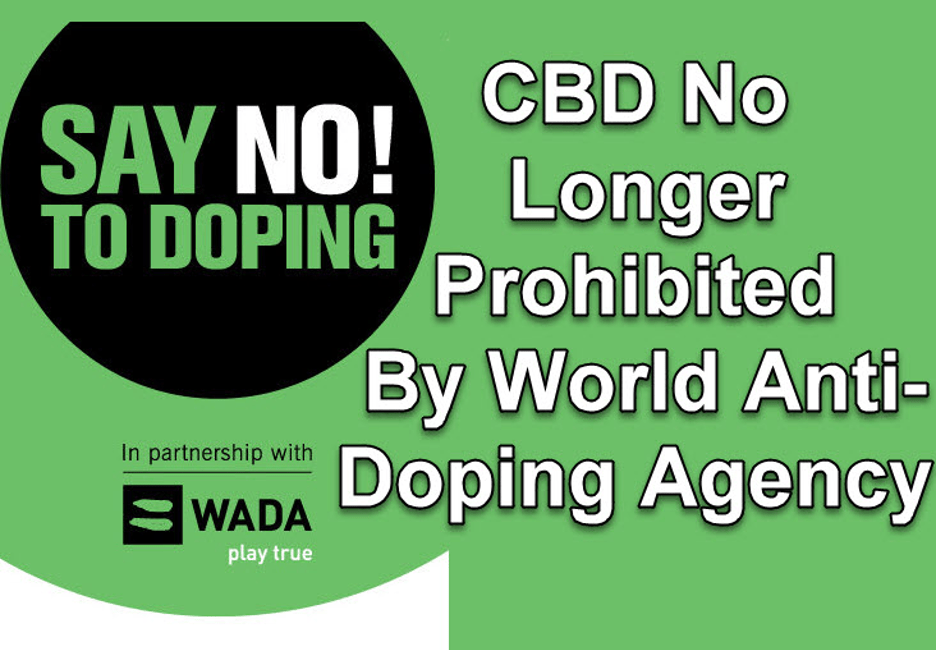
Interestingly, in addition to the WHOโ€™s recommendation to remove CBD from international drug control conventions, the World Anti-Doping Agency (WADA), an international organization that โ€œwas founded with the aim of bringing consistency to anti-doping policies and regulations within sport organizations and governments right across the worldโ€[6], removed CBD from their list of prohibited substances. However, it is important to note that although CBD is no longer prohibited, athletes should be aware that many CBD products contain low levels of THC, which is still a prohibited substance under WADA.
Product Formulation of CBD
For the majority of CBD supplements on the market it appears the products are mostly sold in three different overarching forms, or categoriesโ€”full spectrum extract, broad spectrum extract, and isolate, but what is the difference?
The following definitions of these products have come from the U.S. Hemp Authority Glossary, developed to promote standardized labeling for the hemp industry.
  • Full Spectrum Extract โ€œis hemp extract including THC and other cannabinoids, terpenes, and other naturally occurring compounds, that has been processed without intentional complete removal of any compounds and has a final THC quantification of not greater than 0.3%.โ€
  • Broad Spectrum Extract โ€œis hemp extract that has been intentionally processed to remove THC such that the quantified THC has been deemed non-detectable by a compliant laboratory using a fit-for-purpose method with a limit of quantification of less than 0.01%.โ€
  • Isolate โ€œis the confined molecule and most pure form of the cannabinoid such as CBD.โ€

Ultimately, the difference between a full spectrum, broad spectrum, and isolate products seems to come down to efficacy; the degree of product processing; and number of compounds in the final product. The most important thing you can do as a consumer is to first research the different forms and then choose a product to best fit your needs and desired outcomes.

Because each form of CBD is specific to a consumerโ€™s need, the conversation around full spectrum versus broad spectrum versus isolate CBD is a much bigger one. We will go into more detail about the specific differences about each of these forms of CBD and how they contribute to the entourage effect in a future post.


[1] Bialer, M. (2019) Raphael Mechoulam adn the history of cannabis research. Epigraph. Vol 21 (1) https://www.ilae.org/journals/epigraph/epigraph-vol-21-issue-1-winter-2019/raphael-mechoulam-and-the-history-of-cannabis-research
[2] Andre, C. M., Hausman, J. F., & Guerriero, G. (2016). Cannabis sativa: The Plant of the Thousand and One Molecules. Frontiers in plant science, 7, 19. https://doi.org/10.3389/fpls.2016.00019
[3] 2019 CBD Market Report (Rep.). (2019). Retrieved June 26, 2020, from Brightfield Group website: https://content.brightfieldgroup.com/2019-us-cbd-market
[4] Cannabidiol (CBD): Critical Review Report (Rep.). (2018, June 4). Retrieved June 26, 2020, from World Health Organization website: https://www.who.int/medicines/access/controlled-substances/CannabidiolCriticalReview.pdf
[5] What We Do. (2017, December 01). Retrieved June 26, 2020, from https://www.wada-ama.org/en/what-we-do
[6] 2019 CBD Market Report (Rep.). (2019). Retrieved June 26, 2020, from Brightfield Group website: https://content.brightfieldgroup.com/2019-us-cbd-market
State Regulatory Overview & Federal Factors

Our post this week is brought to you by guest blogger Joy Beckerman, an expert in hemp law and regulations and the new Director of Regulatory and Legal Affairs at Zilis. Joyโ€™s overview of the different Statesโ€™ regulatory guidelines and contributing Federal factors helps shed light upon how the industry is moving forward and what the industry leaders are doing to ensure access across the country.The dome of the United States capitol with an American flag and dramatic clouds behind

As a preliminary matter, itโ€™s key to understand that just because a Federal law is passed to either partially or fully legalize something, it doesnโ€™t mean that it automatically becomes legal in all 50 States. Under the U.S. Constitution, each of our 50 states wield and maintain political powers held for its own State government rather than Federal government. This is why we see a patchwork of laws and their corresponding regulations across the 50 States on a spectrum of issues.

2014 Farm Bill

After decades of advocacy by dedicated grassroots activists and heroic professionals and legislators who later joined the hemp revolution, a short but significant provision titled, โ€œLegitimacy of Industrial Hemp Researchโ€ within the Agricultural Act of 2014 (2014 Farm Bill) was passed; and the amazing hemp crop began to re-establish itself under agricultural pilot programs to study the growth, cultivation, and marketing of industrial hemp in States that enacted laws allowing the cultivation of hemp. The 2014 Farm Bill also defined industrial hemp for the first time in U.S. history, thereby distinguishing it from its Cannabis cousin commonly known as marijuana.

While the 2014 Farm Billโ€™s introductory words clearly stated, โ€œIn Generalโ€“notwithstanding the Controlled Substances Actโ€ฆโ€ 1 โ€”meaning not subject to the Controlled Substances Actโ€”the U.S. Drug Enforcement Administration (DEA) held and publicized the erroneous position for the next four years that hemp extract and cannabinoids derived from hemp were still controlled substances.

The hemp industry was ultimately forced to file a lawsuit against the DEA in the Ninth Circuit Court of Appeals to prove that no part of the hemp plant sown under the provisions of the 2014 Farm Bill, including hempโ€™s derivatives, extracts, and cannabinoids, were controlled substances. Yet, due to the DEAโ€™s messaging, many States were hesitant to embrace the safe and legal opportunities provided by the agricultural pilot program pathway.

2018 Farm Bill

Learning from all this confusion, hemp industry advocacy organizations and Federal legislators began to carefully and strategically draft expanded hemp provisions in the Agriculture Improvement Act of 2018 (2018 Farm Bill), which was enacted on January 1, 2019. The three most relevant provisions of what weโ€™re seeing among the 50 Statesโ€™ permissions and regulationโ€”or lack thereof, as the case may beโ€”are as follows:2

  • Hemp and tetrahydrocannabinols derived from hemp were unequivocally removed from the Controlled Substances Act;
  • The definition of โ€œhempโ€ was expanded for total clarity by specifically stating, โ€œThe term โ€˜hempโ€™ means the plant Cannabis sativa and any part of that plant, including the seeds thereof and all derivatives, extracts, cannabinoids, isomers, acids, salts, and salts of isomers, whether growing or not, with a delta-9 tetrahydrocannabinol concentration of not more than 0.3 percent on a dry weight basis.โ€ (Emphasis added.); and
  • Nothing in the Bill affects or modifies the Federal Food, Drug, and Cosmetic Act.
Image source Florida Farm Bureau.

The final point about the Federal Food, Drug and Cosmetic Act is important for the hemp industry with regard to dietary supplements and food additives. Within the Federal Food, Drug, and Cosmetic Act, a provision commonly referred to as the โ€œInvestigational New Drug (IND) Preclusion,โ€ states that if an article has been authorized for investigation for which substantial clinical investigations have been instituted, and made public, then products containing that substance are precluded from the definition of a โ€œdietary supplementโ€ unless it was marketed as a dietary supplement or as a conventional food before new drug investigations were authorized.3

What does this mean? A great example is the use of cannabidiol (CBD) in the approved drug EPIDIOLEXยฎ. Cannabidiol was submitted as an IND, with substantial clinical investigations made public, and it is currently being debated as to whether CBD can be considered a dietary supplement because no evidence has thus far been identified to demonstrate that CBD  was marketed as a dietary supplement before being used in clinical trials to treat specific childhood epilepsy disorders. Regardless of such evidence, this same statute also grants authority to the U.S. Food & Drug Administration (FDA) to override this restriction and simply issue a regulation allowing a substance to be marketed as a dietary supplement that would otherwise be prohibited under the IND Preclusion. The IND Preclusion only applies to dietary supplements and foods and does not apply to cosmetics, thus cosmetics containing CBD are not affected.

The Market

Despite the ongoing debate, the CBD dietary supplement and food markets have grown to such an extent that the Gallup Poll reported in August of 2019 that one in seven [or 14% of] Americans is using a CBD product of some kind.4 This has occurred because the FDAโ€™s statements concerning the debate amount only to a guidance position at this point. The FDAโ€™s guidance position has never been determined by the courts to be valid, and is neither final, nor legally binding since no final agency actions or determinations have been issued on the subject. In fact, FDA Commissioner Stephen Hahn recently stated during his address at the National Association of State Departments of Agricultureโ€™s 2020 Winter Policy Conference, โ€œPeople are using these [CBD] products. Weโ€™re not going to be able to say, โ€˜You canโ€™t use these products,โ€™ becauseโ€ฆeven if you did, itโ€™s a foolโ€™s game to even try to approach that.โ€5

The hemp industry coalition has been lobbying the FDA to use its overriding authority to allow CBD products to be marketed as dietary supplements and added to food. It has also been providing guidance and safety data to assist the FDA in creating a regulatory framework for quality assurance oversight of hemp processing. The coalition has also been lobbying Congress to mandate these actions, and there is much encouraging movement in these regards.

Challenges Today

In the meantime, and until the FDA formally acts, a mishmash of State laws and regulations govern CBD, with some States only allowing cosmetic CBD products to be sold, and others still not allowing any CBD products to be sold. Conversely, certain States allow all CBD products to be sold with virtually no oversight, while yet others are taking quality assurance into their own hands by creating laws and regulations allowing the sale of all or certain CBD products that are produced in accordance with various testing, labeling, and good manufacturing practices. Some States even have onerous product registration requirements that apply to both in-State and out-of-State manufacturers and distributors.

For the States that do have labeling requirements, these requirements often differ from State to State, making it impossible for national CBD industry leaders to print a single label that complies with all of the various State labeling mandates. One State even requires language that is very similar to, but differs from, FDA-required labeling language, making it impossible to print a label for that State that complies with both State and Federal law.

Yet hemp and its cannabinoids are legal again because we put one foot in front of the other and continue marching this plant down the field. Most State authorities greatly support the CBD industry and do not enforce excessively burdensome requirements. All will eventually come around right and one day weโ€™ll look back on how this critical body of law and regulation unfolded with humor. Stay the course and engage in the process!


[1] Agricultural Act of 2014; H.R. 2642; Pub.L. 113โ€“79, also known as the 2014 Farm Bill

[2]  Agriculture Improvement Act of 2018; S. 3042; Pub.L 115-334, also known as the 2018 Farm Bill

[3] ยง201(ff)(3)(B) of the Federal Food, Drug, and Cosmetic Act [21 U.S.C. ยง 321(ff)(3)(B)]

[4] Jones, J., Saad, L. (2019) Gallup Poll, June 19-July 12, 2019 CBD Consumption Habits [data set] Random sampleโ€”2,543โ€”American adults in all 50 states and the District of Columbia. Retrieved from news.gallup.com

[5] YouTube, โ€œFDA Commissioner Hahn makes first public comments on CBDโ€

Source: https://blog.zilis.com/hemp-vs-marijuana/