History of Hemp in the U.S.

Happy Independence Day! For Americaโ€™s birthday this year, we are taking a walk through the history of our nation to uncover the facts about hemp in the United States. In this weekโ€™s special edition post, letโ€™s look at how our forefathers cultivated and used hemp in the U.S and how freedom from hemp prohibition is allowing us to use this agricultural commodity again.

History of Hemp in the US

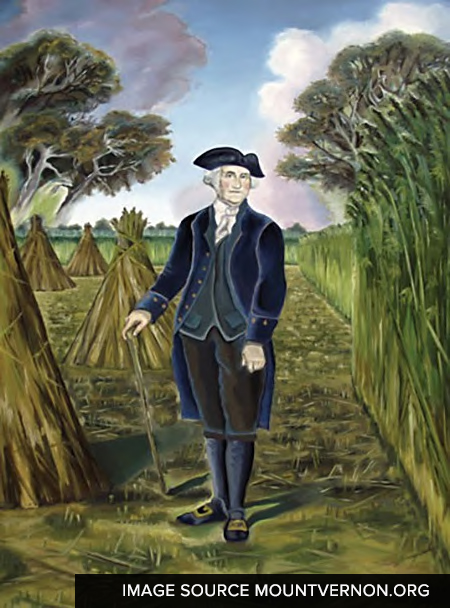
Cannabis sativa L. in the form of hemp (with a THC level not greater than 0.3%), has a rich and deeply rooted history in this country, as it was long-already being cultivated by indigenous tribes for its fiber, grain, and other purposes long before Hempstead, Long Island; Hempstead County, AR; Hempstead, TX; Hemphill, NC; and Hempfield, PA were settled. At the Jamestown settlement in 1616, hemp was grown to manufacture sails, rope, and clothing. The Mayflower itself could not have carried the Pilgrims to Plymouth without its tonnage of hempen sails, rigging, and hemp oakum used as caulking between the shipโ€™s wooden boards. By the 1700s, hemp was of such importance to the security of our emerging nation that during times of shortage colonial farmers were legally required to grow hemp as a staple crop. George Washington grew hemp on his farm at Mt. Vernon because he predicted it would be a more valuable crop than tobacco.
At the time of the American Revolution, the first drafts of the Declaration of Independence were written on hemp paper, however the final draft was penned on animal-skin parchment in 1776. Hemp was legal tender from 1631 to the early 1800โ€™s and could be used by farmers, and others, to pay taxes. From common families to President Lincoln, hemp fiber and hempseed oil were used for a multitude of household purposes, such as for textiles, nutrition, and fueling household lamps.

Early 20th Century

Fast forward into the 20th century and we find that hemp was grown and had been used freely for decades, even centuries, in the United States. In 1916 the U.S. Department of Agriculture (USDA) published findings that showed hemp produces four times more paper per acre than an acre of trees. Even the ten-dollar bill displayed the image of hemp farmer in his fields until 1914.

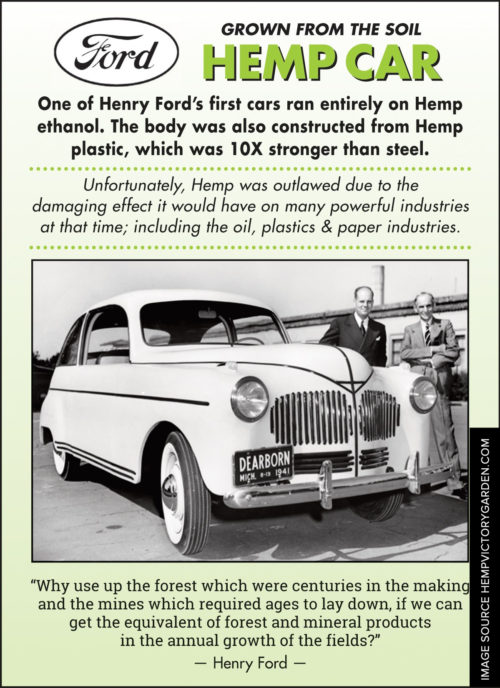
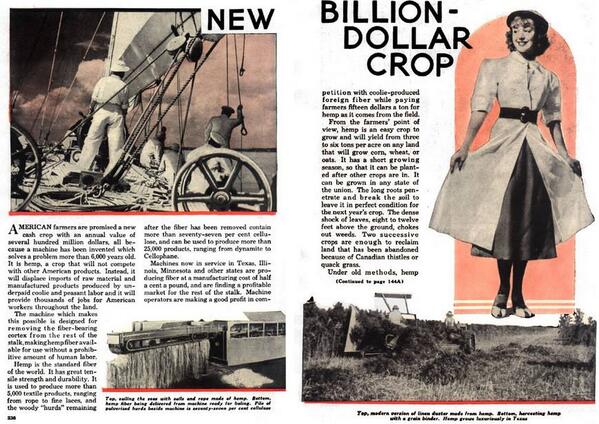
Americans continued to champion hemp until the 1937 Marihuana Tax Act was enacted and heavy taxes discouraged the production of hemp. The taxes were so high that cultivating hemp became unaffordable, even though hemp was still touted as a plant with multiple advantages. In 1938, Popular Mechanics magazine published an article about how hemp could be used for over 25,000 different products, but only those who could afford the taxes would experience hempโ€™s benefits. Popular hemp products ranged from items like fishing nets, overalls, bed linens and other everyday items to products that used hemp cellulose,  like cellophane and dynamite. Even car manufacturer Ford Motors, built a โ€œHemp Carโ€ constructed of hemp plastic that ran on hemp ethanol.
The War Effort

With cannabis-derived products like hempen ropes and sails taxed into near extinction, the U.S. was left at a disadvantage after entering World War II when supplies like rope, sails, and new technologyโ€“the parachute, needed cordage. The USDA initiated the Hemp for Victory campaign in 1942 to reinstate hemp farming in an effort to support the war effort.
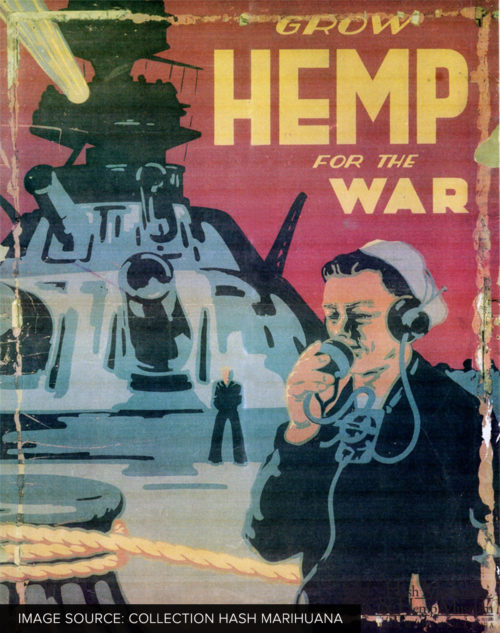
The Hemp for Victory propaganda film educated Americans about all the benefits of hemp, re-taught farmers how to grow hemp, and encouraged everyone to โ€œGo Hempโ€ for the good of the country and the war effort. The success of the campaign produced 150,000 acres of hemp for rope, parachute webbing, firehoses, and soldierโ€™s shoelaces. After WWII was over, hemp fell by the wayside once again. The last commercial hemp field was planted in Wisconsin in 1957. 

Late 20th Century

Hemp was grown commercially, but still taxed heavily. By 1970, the last act to make hemp and cannabis illegal passed. The 1970 Controlled Substance Act passed and formally classified hemp as an illegal Schedule I drug, essentially placing hemp with marijuana in the same group with cocaine and heroin. The Controlled Substance Act legislation vilified Cannabis sativa L. as a dangerous drug and no distinction was made between the two species: hemp and marijuana.

The next few decades of hemp history have been a whirlwind of research, regulation, and rejoicing. In the 1990s, research on cannabis, both hemp and marijuana, was exploding with new information about how cannabis can be used to benefit the body. By 1998, the U.S. began importing food-grade hempseed and hempseed oil from other countries and by 2004, the Hemp Industries Association sued the Drug Enforcement Agency (DEA) in the 9th Circuit Court. They won the right to have sales of hemp foods and hemp body care products permanently protected, defeating the DEA. Their victory paved the way for industrial hemp farming to begin again and in 2007, the first hemp licenses in over 50 years were granted to two North Dakota farmers.

The 21st Century

Seven years later, President Obama signed the Agricultural Act of 2014 (referred to as the 2014 Farm Bill) allowing States to start pilot programs for hemp farming and hemp research, and the following year, the 2015 Industrial Hemp Farming Act (H.R. 525 and S.134) was introduced to try to remove federal restrictions on industrial hemp. Finally, after 81 years of prohibition, the Hemp Farming Act was passed as part of the 2018 Farm Bill on December 20, 2018.

The Hemp Farming Act removed hemp and all hemp extracts from the Controlled Substances Act Schedule I Class of Drugs.

In the summer of 2018, hemp returned to George Washingtonโ€™s Mount Vernon farm and in August 2019, the USDA reported that American farmers had more than quadrupled the amount of land planted with hemp over the prior year. One month later, 544 active hemp seed licenses were granted in the U.S. with 10,672 cultivator licenses in 30 states and 1,323 process licenses. The USDA released their regulations for the hemp industry and passed the Interim Final Rule (IFR) January 27, 2020, with an effective date of March 1, 2020.

The truth is that the United States has had a storied relationship with hemp and hemp products since the very beginning. Hereโ€™s to many more centuries of hemp in America!

Happy 4th of July to you all!
State Regulatory Overview & Federal Factors

Our post this week is brought to you by guest blogger Joy Beckerman, an expert in hemp law and regulations and the new Director of Regulatory and Legal Affairs at Zilis. Joyโ€™s overview of the different Statesโ€™ regulatory guidelines and contributing Federal factors helps shed light upon how the industry is moving forward and what the industry leaders are doing to ensure access across the country.The dome of the United States capitol with an American flag and dramatic clouds behind

As a preliminary matter, itโ€™s key to understand that just because a Federal law is passed to either partially or fully legalize something, it doesnโ€™t mean that it automatically becomes legal in all 50 States. Under the U.S. Constitution, each of our 50 states wield and maintain political powers held for its own State government rather than Federal government. This is why we see a patchwork of laws and their corresponding regulations across the 50 States on a spectrum of issues.

2014 Farm Bill

After decades of advocacy by dedicated grassroots activists and heroic professionals and legislators who later joined the hemp revolution, a short but significant provision titled, โ€œLegitimacy of Industrial Hemp Researchโ€ within the Agricultural Act of 2014 (2014 Farm Bill) was passed; and the amazing hemp crop began to re-establish itself under agricultural pilot programs to study the growth, cultivation, and marketing of industrial hemp in States that enacted laws allowing the cultivation of hemp. The 2014 Farm Bill also defined industrial hemp for the first time in U.S. history, thereby distinguishing it from its Cannabis cousin commonly known as marijuana.

While the 2014 Farm Billโ€™s introductory words clearly stated, โ€œIn Generalโ€“notwithstanding the Controlled Substances Actโ€ฆโ€ 1 โ€”meaning not subject to the Controlled Substances Actโ€”the U.S. Drug Enforcement Administration (DEA) held and publicized the erroneous position for the next four years that hemp extract and cannabinoids derived from hemp were still controlled substances.

The hemp industry was ultimately forced to file a lawsuit against the DEA in the Ninth Circuit Court of Appeals to prove that no part of the hemp plant sown under the provisions of the 2014 Farm Bill, including hempโ€™s derivatives, extracts, and cannabinoids, were controlled substances. Yet, due to the DEAโ€™s messaging, many States were hesitant to embrace the safe and legal opportunities provided by the agricultural pilot program pathway.

2018 Farm Bill

Learning from all this confusion, hemp industry advocacy organizations and Federal legislators began to carefully and strategically draft expanded hemp provisions in the Agriculture Improvement Act of 2018 (2018 Farm Bill), which was enacted on January 1, 2019. The three most relevant provisions of what weโ€™re seeing among the 50 Statesโ€™ permissions and regulationโ€”or lack thereof, as the case may beโ€”are as follows:2

  • Hemp and tetrahydrocannabinols derived from hemp were unequivocally removed from the Controlled Substances Act;
  • The definition of โ€œhempโ€ was expanded for total clarity by specifically stating, โ€œThe term โ€˜hempโ€™ means the plant Cannabis sativa and any part of that plant, including the seeds thereof and all derivatives, extracts, cannabinoids, isomers, acids, salts, and salts of isomers, whether growing or not, with a delta-9 tetrahydrocannabinol concentration of not more than 0.3 percent on a dry weight basis.โ€ (Emphasis added.); and
  • Nothing in the Bill affects or modifies the Federal Food, Drug, and Cosmetic Act.
Image source Florida Farm Bureau.

The final point about the Federal Food, Drug and Cosmetic Act is important for the hemp industry with regard to dietary supplements and food additives. Within the Federal Food, Drug, and Cosmetic Act, a provision commonly referred to as the โ€œInvestigational New Drug (IND) Preclusion,โ€ states that if an article has been authorized for investigation for which substantial clinical investigations have been instituted, and made public, then products containing that substance are precluded from the definition of a โ€œdietary supplementโ€ unless it was marketed as a dietary supplement or as a conventional food before new drug investigations were authorized.3

What does this mean? A great example is the use of cannabidiol (CBD) in the approved drug EPIDIOLEXยฎ. Cannabidiol was submitted as an IND, with substantial clinical investigations made public, and it is currently being debated as to whether CBD can be considered a dietary supplement because no evidence has thus far been identified to demonstrate that CBD  was marketed as a dietary supplement before being used in clinical trials to treat specific childhood epilepsy disorders. Regardless of such evidence, this same statute also grants authority to the U.S. Food & Drug Administration (FDA) to override this restriction and simply issue a regulation allowing a substance to be marketed as a dietary supplement that would otherwise be prohibited under the IND Preclusion. The IND Preclusion only applies to dietary supplements and foods and does not apply to cosmetics, thus cosmetics containing CBD are not affected.

The Market

Despite the ongoing debate, the CBD dietary supplement and food markets have grown to such an extent that the Gallup Poll reported in August of 2019 that one in seven [or 14% of] Americans is using a CBD product of some kind.4 This has occurred because the FDAโ€™s statements concerning the debate amount only to a guidance position at this point. The FDAโ€™s guidance position has never been determined by the courts to be valid, and is neither final, nor legally binding since no final agency actions or determinations have been issued on the subject. In fact, FDA Commissioner Stephen Hahn recently stated during his address at the National Association of State Departments of Agricultureโ€™s 2020 Winter Policy Conference, โ€œPeople are using these [CBD] products. Weโ€™re not going to be able to say, โ€˜You canโ€™t use these products,โ€™ becauseโ€ฆeven if you did, itโ€™s a foolโ€™s game to even try to approach that.โ€5

The hemp industry coalition has been lobbying the FDA to use its overriding authority to allow CBD products to be marketed as dietary supplements and added to food. It has also been providing guidance and safety data to assist the FDA in creating a regulatory framework for quality assurance oversight of hemp processing. The coalition has also been lobbying Congress to mandate these actions, and there is much encouraging movement in these regards.

Challenges Today

In the meantime, and until the FDA formally acts, a mishmash of State laws and regulations govern CBD, with some States only allowing cosmetic CBD products to be sold, and others still not allowing any CBD products to be sold. Conversely, certain States allow all CBD products to be sold with virtually no oversight, while yet others are taking quality assurance into their own hands by creating laws and regulations allowing the sale of all or certain CBD products that are produced in accordance with various testing, labeling, and good manufacturing practices. Some States even have onerous product registration requirements that apply to both in-State and out-of-State manufacturers and distributors.

For the States that do have labeling requirements, these requirements often differ from State to State, making it impossible for national CBD industry leaders to print a single label that complies with all of the various State labeling mandates. One State even requires language that is very similar to, but differs from, FDA-required labeling language, making it impossible to print a label for that State that complies with both State and Federal law.

Yet hemp and its cannabinoids are legal again because we put one foot in front of the other and continue marching this plant down the field. Most State authorities greatly support the CBD industry and do not enforce excessively burdensome requirements. All will eventually come around right and one day weโ€™ll look back on how this critical body of law and regulation unfolded with humor. Stay the course and engage in the process!


[1] Agricultural Act of 2014; H.R. 2642; Pub.L. 113โ€“79, also known as the 2014 Farm Bill

[2]  Agriculture Improvement Act of 2018; S. 3042; Pub.L 115-334, also known as the 2018 Farm Bill

[3] ยง201(ff)(3)(B) of the Federal Food, Drug, and Cosmetic Act [21 U.S.C. ยง 321(ff)(3)(B)]

[4] Jones, J., Saad, L. (2019) Gallup Poll, June 19-July 12, 2019 CBD Consumption Habits [data set] Random sampleโ€”2,543โ€”American adults in all 50 states and the District of Columbia. Retrieved from news.gallup.com

[5] YouTube, โ€œFDA Commissioner Hahn makes first public comments on CBDโ€

Source: https://blog.zilis.com/hemp-vs-marijuana/